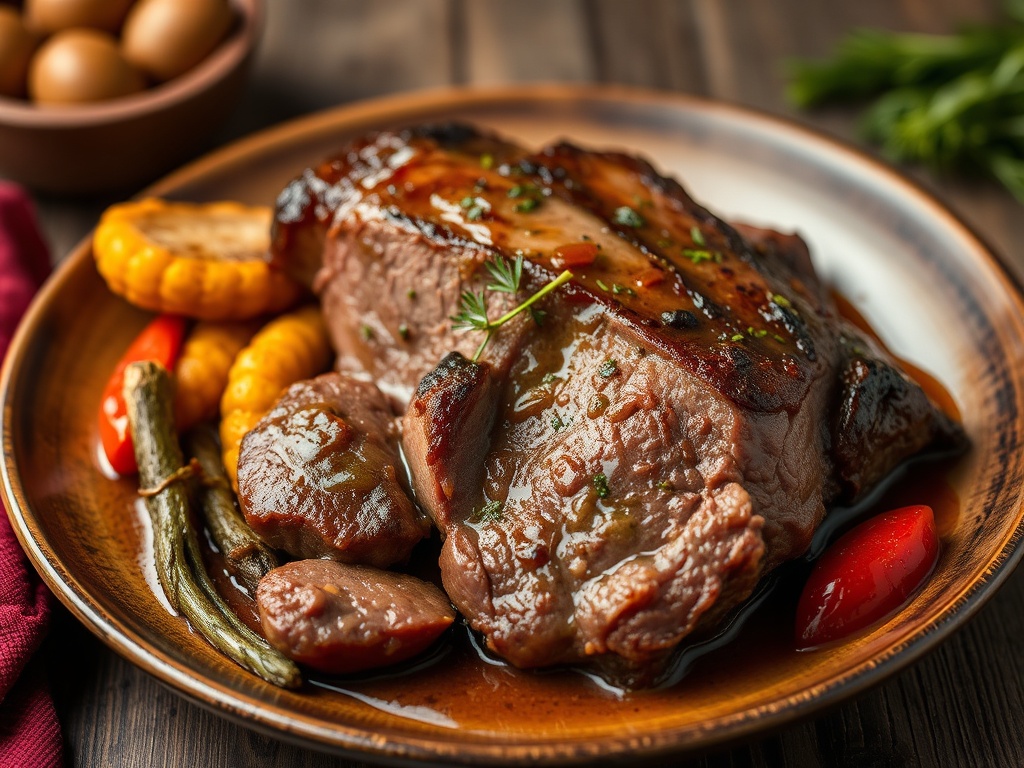
German Sauerbraten Authentic Pot Roast
Embark on a culinary journey to the heart of Germany with Sauerbraten, a dish that epitomizes comforting, slow-cooked perfection. This authentic German pot roast is more than just a meal; it's a centuries-old tradition, renowned for its distinct tangy-sweet flavor profile and melt-in-your-mouth tenderness. Forget everything you thought you knew about pot roasts, because Sauerbraten’s unique preparation, involving a multi-day marinade in a aromatic blend of vinegar, wine, and spices, transforms humble beef into an extraordinary culinary masterpiece. Get ready to discover the secrets behind this iconic European delight, a true testament to the rich and diverse world of German cuisine that promises to impress at any table.
The Heart of German Cuisine: What is Sauerbraten?
Sauerbraten, literally translating to "sour roast," is Germany's national dish and a cherished staple in homes and restaurants across the country. At its core, it's a traditional pot roast, most commonly prepared with beef, though regional variations might feature venison, lamb, pork, or even horse meat. What truly sets Sauerbraten apart is its distinctive preparation method: the meat undergoes an extensive marination process, typically lasting anywhere from three to ten days, in a brine composed of vinegar, water, red wine, and a generous medley of herbs and spices like bay leaves, juniper berries, and peppercorns. This lengthy soak is crucial, as it tenderizes the meat while infusing it with a complex, tangy, and subtly sweet flavor that is utterly unique. After marinating, the meat is slow-braised until incredibly tender, then served with a rich, velvety gravy made from the strained braising liquid, often thickened with crushed gingerbread or gingersnaps, adding another layer of intriguing sweetness and spice.
The Time-Honored Tradition: Why Marinate?
The extended marination period is not merely a step in the Sauerbraten recipe; it is the soul of the dish, a time-honored tradition passed down through generations. This critical phase serves multiple vital purposes, transforming an ordinary cut of meat into the extraordinary centerpiece of a German feast. Firstly, the acidic components in the marinade – primarily vinegar and often red wine – work to tenderize the meat. The acid gently breaks down tough connective tissues, ensuring that even leaner cuts become wonderfully supple and easy to slice after slow cooking. Beyond tenderization, the marinade is a potent flavor infuser, permeating every fiber of the meat with its aromatic blend. Key ingredients in this magical elixir typically include a robust red wine vinegar or apple cider vinegar, water, and red wine, creating the characteristic "sour" base. These are complemented by a symphony of aromatics such as sliced onions, carrots, and celery, along with a rich array of spices like bay leaves, whole peppercorns, juniper berries, cloves, and sometimes a hint of allspice or mustard seeds. Occasionally, a touch of sweetness from sugar, honey, or molasses is added to balance the tang. This long immersion, ideally for three to ten days in the refrigerator, is what imbues the Sauerbraten with its deep, complex, and utterly unforgettable taste profile.
Crafting the Perfect Pot Roast: The Cooking Process
Once the arduous, yet essential, marination period is complete, the journey to a perfect Sauerbraten truly begins with the cooking phase. This stage requires patience and a gentle hand, but the results are profoundly rewarding. First, the marinated meat is removed from the brine, thoroughly patted dry, and then seared vigorously on all sides in a heavy-bottomed pot or Dutch oven until a beautiful, deep brown crust develops. This initial browning is crucial for building a rich flavor foundation through the Maillard reaction. After browning, the pot is deglazed, typically with a portion of the strained marinade, scraping up all those delicious browned bits from the bottom. The reserved vegetables from the marinade, along with fresh aromatics, are often added back to the pot. The meat is then returned to the pot, submerged in the remaining marinade and perhaps a little extra broth or water, ensuring it is mostly covered. The pot is then tightly covered and transferred to a low-temperature oven, or simmered gently on the stovetop, for several hours. This slow braising, typically between three to five hours, is where the magic of tenderization continues, transforming the beef into incredibly succulent and fall-apart tender perfection. Patience during this step is paramount, as rushing it would compromise the texture and depth of flavor.
The Secret to the Signature Gravy: Lebkuchen and More
No Sauerbraten is complete without its iconic, rich, and velvety gravy, a culinary masterpiece in its own right that perfectly complements the tender pot roast. The creation of this distinctive sauce begins after the meat has been braised to perfection. The braising liquid, brimming with all the flavors of the marinade, meat drippings, and cooked aromatics, is carefully strained to remove any solids. This flavorful liquid forms the base of the gravy. The true secret to Sauerbraten gravy, and what gives it its characteristic depth and slightly sweet, spiced undertone, lies in the addition of crushed gingerbread cookies (Lebkuchen) or gingersnaps. These cookies not only act as a thickening agent, imparting a beautiful consistency, but also introduce a complex blend of spices like ginger, cinnamon, cloves, and cardamom, which beautifully harmonize with the tangy notes of the marinade. The strained liquid is brought to a simmer, and the crushed cookies are whisked in until the gravy thickens to the desired consistency. Depending on regional variations and personal preference, additional elements such as raisins, a touch more sugar, or even a splash of cream can be incorporated to further balance and enrich the flavors, creating a gravy that is both tangy and sweet, savory and subtly spiced, making it an unforgettable component of this classic German meal.
Serving Sauerbraten: Traditional Accompaniments
Serving Sauerbraten is an art that revolves around pairing this magnificent pot roast with traditional accompaniments designed to soak up its exquisite gravy and balance its rich, tangy flavors. The classic German pairing is undoubtedly with Kartoffelkloesse, fluffy potato dumplings that are perfect for absorbing every drop of the luscious sauce. Alternatively, Spätzle, small, soft egg noodles, offer a delightful textural contrast and are equally adept at carrying the gravy's complex flavors. Another indispensable side is Rotkohl, or braised red cabbage. This vibrant dish, cooked with apples, vinegar, and spices, provides a wonderful sweet-and-sour counterpoint to the richness of the Sauerbraten, cleansing the palate with each bite. Many also enjoy a dollop of applesauce or tart lingonberry jam alongside their Sauerbraten, adding a fruity brightness that enhances the overall experience. For a truly authentic presentation, slice the tender Sauerbraten against the grain into thick, generous portions, arranging it beautifully on a plate with your chosen sides. Ladle plenty of that irresistible gravy over the meat and dumplings. To complete the meal, consider pairing it with a crisp German pilsner or a robust, dry red wine that can stand up to the dish's bold flavors, making for a truly memorable and satisfying European dining experience.
Conclusion
German Sauerbraten is far more than just a pot roast; it's a culinary emblem, a testament to time-honored traditions, and a symphony of flavors that delights the senses. From its long, transformative marinade to the slow braising and the unique, spiced gingerbread-thickened gravy, every step in its preparation contributes to a dish of unparalleled depth and comfort. The tangy-sweet balance, coupled with the melt-in-your-mouth tenderness of the beef, makes Sauerbraten a truly unforgettable experience, perfectly complemented by classic sides like potato dumplings and braised red cabbage. It's a celebration of hearty German cuisine, inviting you to savor a taste of European heritage right in your own home. Don't let the multi-day marinating process intimidate you; the patience required yields rewards that are absolutely worth the wait. We encourage you to embark on this delicious adventure and bring the authentic flavors of Germany to your table. For more easy European recipes, from French to Italian and Spanish cooking, be sure to explore the culinary delights awaiting you on Easy European Meals!
[Discover German Sauerbraten, the authentic pot roast with a tangy-sweet marinade. Learn to make this tender, flavorful European classic with our easy recipe guide.]
Commentaires
Enregistrer un commentaire